
The Olympic rings, Olympic motto, Olympic flame and Olympic torch give the Olympic Games and the entire Olympic movement their already well-known identity.
Olympic Rings and Flag
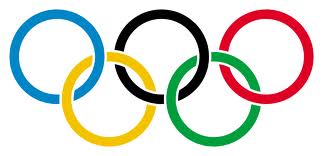
Five rings (blue, black, red, yellow and green), interlaced with one another, represent the five continents and symbolize the universality of Olympism and the meeting of athletes from all over the world during the Games.
The rings are placed on a white background, together forming the Olympic flag. Combined in this way, the six colors of the flag (white, blue, black, red, yellow and green) represent all the nations of the world.
Pierre de Coubertin
The Olympic flag has a white background, with five interlaced rings (blue, yellow, black, green and red) in the center. This design has a symbolic meaning: the rings represent the five continents of the world united by Olympism.
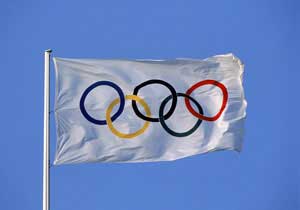
In June 1914, both the flag and the rings were presented at the Olympic Congress in Paris. They were planned to be presented at the 1916 Berlin Games, which were not held because of the First World War, so both the flag and the rings first appeared in public at the 1920 Games in Antwerp.
Olympic Motto
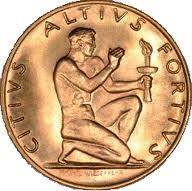
These three Latin words became the Olympic motto in 1894, at the proposal of Pierre de Coubertin, when the International Olympic Committee was founded.
Another recognizable symbol of Olympism is the slogan: “The most important thing in life is not triumph, but the struggle; the essential thing is not to have conquered, but to have fought well.”
Shortly before the Tokyo Olympic Games in 2021, at the proposal of then IOC President Thomas Bach, the word TOGETHER was added. The word “together” emphasizes solidarity within the Olympic Movement and beyond.
Flame and Torch
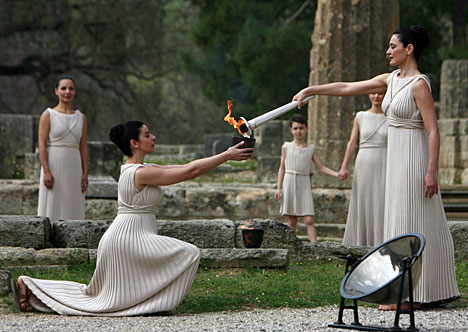
One of the best-known symbols of the Games. In memory of the Games of Ancient Greece, the flame is lit in Olympia by the rays of the sun, from where it begins its journey to the host city of the Games.
For each Games, a special torch is made, each torchbearer carrying a copy of it, while the flame is what is passed from one person to another.
The Olympic flame was symbolically lit for the first time in Amsterdam in 1928 at the entrance to the Olympic stadium, and it also burned at the “Colosseum” Stadium during the 1932 Games in Los Angeles. However, these were not authentic Olympic flames, by which today is meant the flame lit in ancient Olympia in Greece.
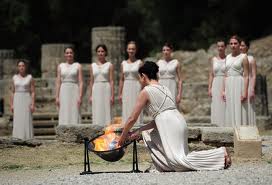
It was only in 1936, for the Berlin Games, that the rules of the “game with fire” were established, and they remain in force today. The idea of Berlin professor Carl Diem to light the Olympic flame in Olympia using the rays of the sun and to relay it to Berlin was presented to the IOC by the President of the German Olympic Committee, Theodor Lewald, and it was accepted immediately.
The torch was carried through seven countries: Greece, Turkey, Bulgaria, Yugoslavia, Hungary, Austria and Germany. Its route was 3,422 kilometers long, and the last torchbearer was athlete Fritz Schilgen.
The Olympic flame passed through Yugoslavia three times – for the 1936 Games in Berlin, the 1972 Games in Munich, and the 1984 Winter Olympic Games in Sarajevo.
The Flame in Yugoslavia in 1936
The most dramatic passage was the first one, prompted by the Resolution signed by 100 distinguished athletes and public figures calling for a boycott of the Berlin Games.
The text of the Resolution with the mentioned signatures was published in “Politika” on April 5, 1936, after a real feat by its journalists and editors, who managed to outwit censorship. The result was protests in a large number of places in Yugoslavia through which the Olympic flame was carried.
The most turbulent protests took place in Banja Luka, so the police had to intervene in order to save the Olympic torch.
However, already on April 10, the Yugoslav Council of Sports Federations announced that Yugoslavia would take part in the Olympic Games in Berlin, and so it did, but not everyone traveled to the German capital. Most members of our national football team refused to travel to Berlin, and the Football Association of Yugoslavia withdrew from participation in the Olympic Games.
Torch Routes
In 1976, the flame was transferred from Greece to the New World by satellite. Heat sensors in Greece detected the flame, and the signal was sent to Ottawa via satellite.
The torch, but not the flame, was taken into space by astronauts in 1996 and 2000, and in 2000 divers carried a lit torch underwater.
For the 2004 Athens Games, the torch crossed all continents and visited all the cities that had hosted previous Games, as well as Beijing, the host city of the next Games in 2008.
Medals
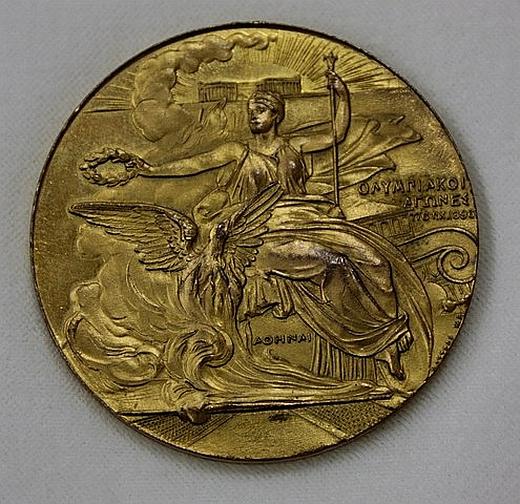
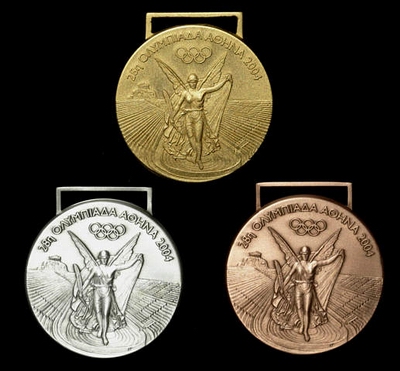
Awarding medals to winners is another symbol associated with the Olympic Games. Medals are made of gilded silver (“gold”), silver and bronze, and are awarded to the top three athletes in each event.
The medals at each Games have a specific design decided by the organizer of each edition of the Games. From 1928 to 2000, the obverse of every medal featured the goddess Nike, the traditional Greek goddess of victory.
In 2004, the appearance of the obverse of the medal was changed in order to point more directly to the Greek character of the Games. The medals from the Athens Games depict the goddess Nike flying toward the Olympic stadium.
Anthem
The Olympic anthem is played every time the Olympic flag is raised. The anthem was composed by the Greek composer Spyridon Samaras, with lyrics by the Greek poet Kostis Palamas.
Both the music and the lyrics were chosen by Demetrius Vikelas, the first President of the IOC. The anthem was first performed during the opening ceremony of the first Games in Athens in 1896, but it did not become the official anthem of the IOC until 1958.
At all Games from 1896 to 1960, the host country composed a special anthem.
Firsts in the History of the Olympic Games
- athletes from all five continents took part in Stockholm in 1912;
- the Olympic rings were presented in 1920;
- the Olympic flag was raised in 1920;
- the flame was lit in Amsterdam in 1928;
- the torch was relayed from Olympia to the host city, Berlin, in 1936;
- the Olympic Games mascot was introduced in 1972 in Munich – the dog “Waldi”.